
BECERRA WELLNESS INSTITUTE
Research, innovation, education, and workforce development in behavioral health.
The Becerra Wellness Institute is a nonprofit advancing behavioral health through research, innovation, education, workforce development, technology, and international collaboration. We study how counselors and psychologists are formed, and we build the programs that form them. Our applied research concentrates on clinical supervision, family systems, and technology in counseling. Projects reach across two countries and two languages. Everything starts with the same question: what does it actually take to develop a competent, grounded clinician.
Our Mission
Becerra Wellness Institute is a nonprofit advancing behavioral health through research, innovation, education, workforce development, technology, and international collaboration.
In practice, that means strengthening the pipeline that produces skilled behavioral health professionals and the communities they serve. We conduct original research, train clinical supervisors, run international study programs, and build workforce pathways for people who have been shut out of them. Our work is bilingual by design and cross-cultural in practice. We partner with universities, clinics, employers, and community organizations in the United States and Latin America to test ideas in real settings rather than in theory alone.
What We Do
-
![]()
Research
Applied study of clinical supervision, family systems, and technology in counseling.
-
![]()
Innovation
Original clinical models, instruments, and frameworks built for real training settings. Also interested in help developing technology hardware and software through technology transfer projects.
-
![]()
Education
Supervision training, continuing education, and curriculum design for programs and practices.
-
![]()
Workforce Development
Job readiness, reentry support, and pathways into the behavioral health professions.
-
![]()
Technology
Responsible integration of artificial intelligence and data systems in counseling.
-
![]()
International Collaboration
Study abroad, faculty exchange, and joint research with partners across Latin America.




Clinical supervision is where clinicians are made and one of the least studied parts of counselor training. BWI develops and tests supervision models that treat the supervisory hour as a teaching environment with its own pedagogy, in partnership with university faculty in the United States and Colombia.
Clinical Supervision Research
Reflective Documentary Supervision
-
Reflective Documentary Supervision (RDS)
A supervision approach that uses documentary analysis and family-of-origin reflection to support deeper clinical development and cross-cultural training.
-
Clinical Supervision Pedagogical Model (CSPM)
A structured model for teaching clinical supervision, grounded in Colombian regulatory practice and designed to strengthen the development of new supervisors.
-
Critical Supervisory Learning Cycle (CSLC)
A learning framework built around exposure, discomfort, reflection, and integration, with particular attention to clinical training in Latin American contexts.
Here, creativity meets opportunity. Whatever you're building, we're here to help you take the first step with confidence. Driven by curiosity and built on purpose, this is where bold thinking meets thoughtful execution. Let’s create something meaningful together.
Supervision Training and Continuing Education
Professions have always built senior practitioners out of junior work. Case notes, chart reviews, first drafts, and routine intakes are how novices learn judgment. Automation is now absorbing much of that entry-level work across many fields. BWI studies what happens to professional formation when the developmental ladder loses its bottom rungs. The program begins in counselor education and supervision and expands outward into other professional fields, with the long-term aim of producing a measurable index of formation risk.
Professional Formation and Formation Risk
Becerra, M. D., Silva Silva, A. S., Ospina Botero, M., Bernal Velez, P., & Sandoval, K. N. (2026). Reflective Documentary Supervision: Integrating Documentary Analysis and Family-of-Origin Reflections in Cross-Cultural Training. Journal of Humanistic Psychology.
FEATURED
This study introduces the RDS method and documents its use in cross-cultural supervision training with psychology students and practicing clinicians.
Current Research in Progress
A study of clinical supervision as psychology education
The Clinical Supervision Pedagogical Model
The Critical Supervisory Learning Cycle
Reconstructing the Self: Masculine Identity Rupture and Pathways to Re-engagement in Men's Life Transitions
The Éxito Model: A Five-Phase Rehabilitation Framework for Men in Life Transition
Depressive Symptoms and Hypertension Risk Among U.S. Adult Men (secondary analysis of national survey data)
Family therapy manuscript on narrative and cultural storytelling in family treatment
Research Ethics and Oversight
BWI research involving human participants proceeds under institutional review board approval. Data collection protocols, consent materials, and participant handbooks are developed for each study and produced in the working language of the site.
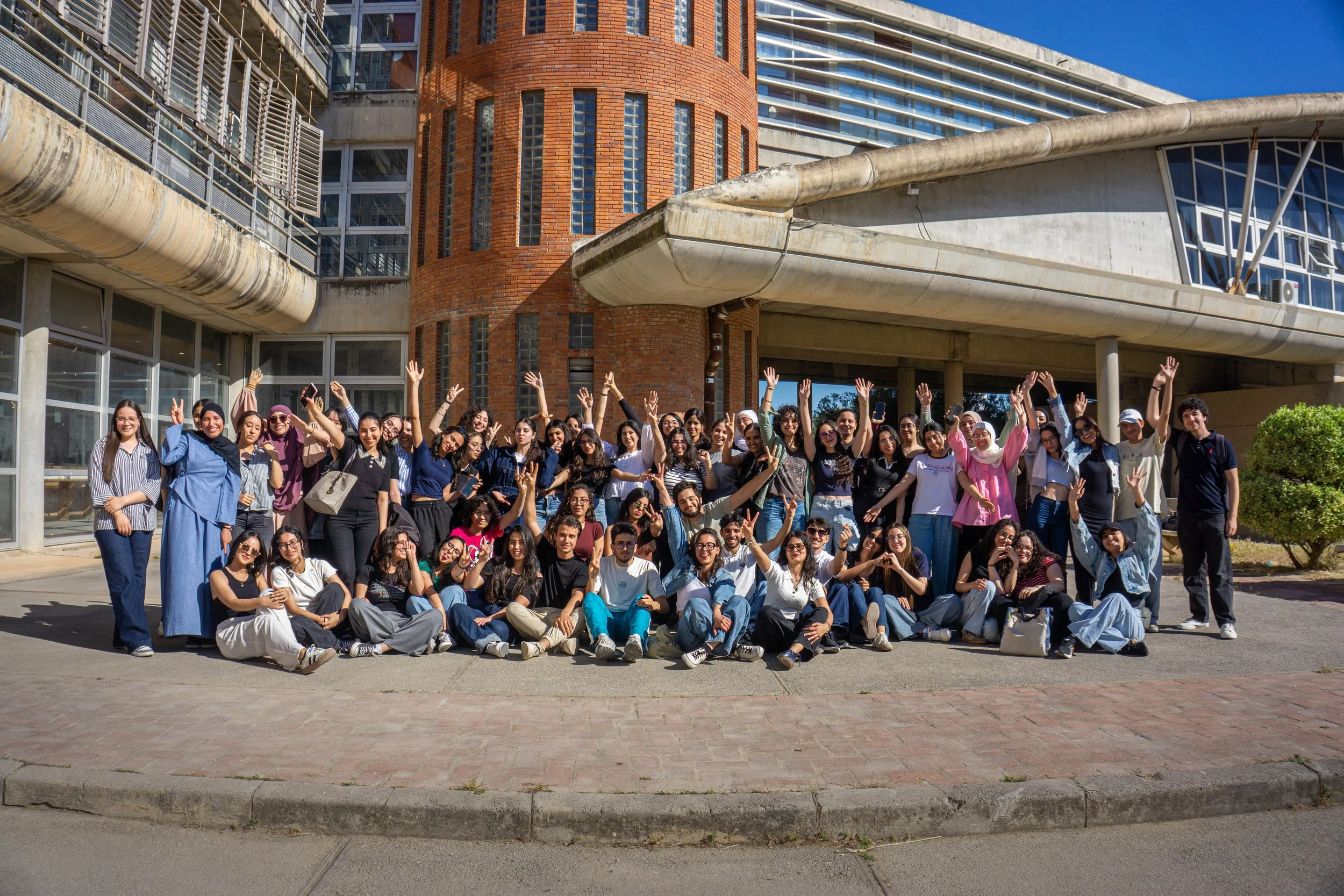
Colombia Professional Counselor Study Tour
International professional study for counselors and counselors in training.
Participants travel through Colombia to work alongside Colombian clinicians, faculty, and students, pairing site visits and clinical observation with formal supervision training and structured reflection designed for cross-cultural competence built from experience, not a textbook chapter.
-
Who this program is for
Practicing counselors, clinical supervisors, doctoral students, and graduate trainees who already carry a caseload. Spanish fluency welcome, not required.
-
Quarterly training in Colombia
Hosted in Pereira, Santa Marta and Barranquilla, Bogotá, and Medellín, delivered with university and clinical partners co-authored and co-designed with our Colombian collaborators.
-
Fulbright Specialist Roster
Dr. Michael D. Becerra has been named to the Fulbright Specialist Roster (September 2026 – September 2029), eligible to be matched with host-institution projects across Latin America.
Technology and counseling practice
Artificial intelligence and data systems are already inside behavioral health, whether the field has decided how to use them or not. BWI studies the practical and developmental consequences how technology reshapes clinical training, how case management systems support high-need populations, and how counselors can use new tools without losing the clinical judgment those tools were supposed to support.
AI and the future of clinical training
Examines what supervision and training programs need to change when documentation, summarizing, and routine review developmental work in disguise disappear from a trainee’s day.
Case management and outcome tracking
Our affiliated reentry program uses the TIGER System for intake, service planning, case notes, and performance review in one place, producing the clean data real evaluation requires.
Data infrastructure and informatics
Proposal development for regional behavioral health data systems and technical review of clinical data practices — giving small organizations data capacity that usually belongs to large institutions.
Two workforce problems sit at the center of our applied work: behavioral health does not have enough bilingual clinicians, and men leaving incarceration do not have real pathways back into stable work. BWI builds on both fronts job readiness curriculum, clinical intern training, and the research, evaluation, and coalition-building behind reentry services delivered by our affiliated clinical practice.
Workforce development
Reentry services for men
Trauma-informed, culturally grounded services structured on the five phases of the Éxito Model — from early engagement through counseling, work placement, job coaching, mentoring, and case management. Clinical services are delivered by Becerra Wellness LLC; BWI supports the program through research, evaluation, coalition-building, training, and intern supervision.
Work With Purpose
BWI’s job readiness curriculum, built to run alongside pre-release programming. Covers the practical ground of getting and keeping work, plus modules on identity, purpose, and narrative most workforce curricula skip.
Clinical internship and bilingual workforce pipeline
Graduate clinical interns working in reentry and community behavioral health settings receive structured supervision grounded in our own research, building bilingual capacity across community service settings.
Men’s health and life transition
Men show up in behavioral health late, often after a rupture has already happened job loss, incarceration, divorce, injury, retirement, migration, the end of a defining role. BWI builds clinical frameworks and conducts research aimed at that moment. Our work is bilingual and grounded in the experience of Hispanic and Latino men, with application across populations.
The Éxito Model
A five-phase framework for working with adult men through life transition. Designed for counseling, rehabilitation, and reentry settings, and it works in English or Spanish without losing meaning in translation.
Encuentro
Relationship before assessment. The work starts when the man decides the room is safe enough to stay in
Exploración
Assessment across situation, self, support, and strategies, alongside mental health screening, health indicators, vocational readiness, and cultural identity.
Integración
Structured participation and group work, where restrictive expectations about manhood become examinable in the presence of men modeling something else.
Transformación
Consolidation across health, work, and relationships, with the clinical act of naming what changed.
Ofrenda
Contribution back to others, treated as part of the change rather than a reward for it.
Masculine identity rupture
Describes what happens when the material, relational, or physical conditions a man built his sense of self on are removed the earlier problem beneath falling short of expectations about manhood. A man navigating rupture needs help rebuilding a structure, not meeting a standard that no longer has a basis.
An emerging line of work
Masculine identity rupture
BWI is extending into population-level analysis, starting with a national survey study of depressive symptoms and hypertension risk among adult men in the United States — keeping clinical frameworks honest against real patterns.
Family systems and cultural practice
Families carry their history in the stories they tell and the ones they avoid. BWI’s family systems work examines how cultural narrative, family of origin, and intergenerational patterns show up in both treatment and clinical training. Our research in this area is bilingual and draws directly from Hispanic and Latino family practice.
-
Cuentoterapia
Brings storytelling into family therapy as a working clinical method — cultural and inherited narratives become material a family can examine together. A manuscript on the method is in preparation for peer review.
-
Family of origin in clinical formation
A multi-year research partnership with Colombian university faculty studying how family of origin shapes the clinical development of psychology students, feeding directly into the reflective methods we teach.